The hippopotamus (Hippopotamus amphibius), also shortened as “hippo,” is one of the only two extant species in the family Hippopotamidae, along with the pygmy hippopotamus. They are also known as the largest mammals after elephants and rhinos and are believed to inhabit swamps, rivers, and lakes.
Here are the following facts one needs to know about Hippopotamus:
- Hippos are considered the second largest land animal on Earth (first place goes to the elephant!). Males measure around 3.5 m long and 1.5 m tall and can weigh up to 3,200 kg.
- These magnificent mammals were once found throughout all sub-Saharan Africa. Sadly, populations have declined due to habitat loss and hunting. Today, they are largely confined to protected areas in East African countries.
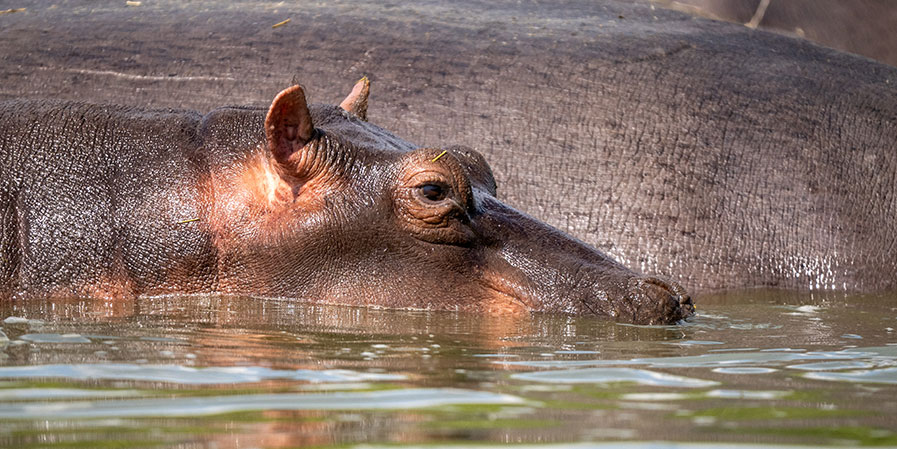
- Hippos are large semi-aquatic mammals with a large barrel-shaped body, short legs, a short tail, and an enormous head! They have greyish to muddy-brown skin, which fades to a pale pink color underneath.
- Despite their enormous size, hippos are great swimmers and can hold their breath for up to five minutes underwater. When completely submerged, their ears and nostrils fold shut to keep water out.
- To stay cool in the blistering African heat, hippos spend most of their day in rivers and lakes. Their eyes, nose, and ears are located on the top of their heads, which means they can see and breathe while submerged in the water. What’s more, these super-cool creatures sweat an oily red liquid, which helps protect their skin from drying out and acts as a sunblock.
- In the wild, hippos live for around 40 years. In captivity, they tend to live longer and may reach up to 50 years old.
- Hippos are most active at night, when they forage for food. They are herbivores and eat mostly grass—and boy do they eat grass! In just one night, they can guzzle down up to 35kg of their favorite grub.
- Dominant males are very protective over their group. To warn off rival males, they open their huge mouths and display their long, curved canines! They also make loud grunts and aggressive splashes in the water.
- Female hippos, called cows, give birth every two years, usually to a single calf. Soon after birth, the mother and her baby join up with other cows and calves for protection against predators, such as crocodiles, lions, and hyenas.
- Hippos usually live in groups (or “herds”) of around ten to 20 individuals, led by one large dominant male. The other members are females, their young, and a few young non-breeding males.
At Kitu Afrika, we are always ready to make your journey worthwhile. Book with us a safari today.
Related Posts